Oops! Something went wrong while submitting the form.
By providing a telephone number and submitting this form you are consenting to be contacted by SMS text message. Message & data rates may apply. You can reply STOP to opt-out of further messaging.
Case Study
From Offshore to Onshore: How FundEasy Accelerated Application Upgrade with Fraction - a Case Study
When offshore cost savings turned into timeline bloat and miscommunication, FundEasy replaced its development team with onshore fractional engineers — and compressed a five-year roadmap into less than twelve months.
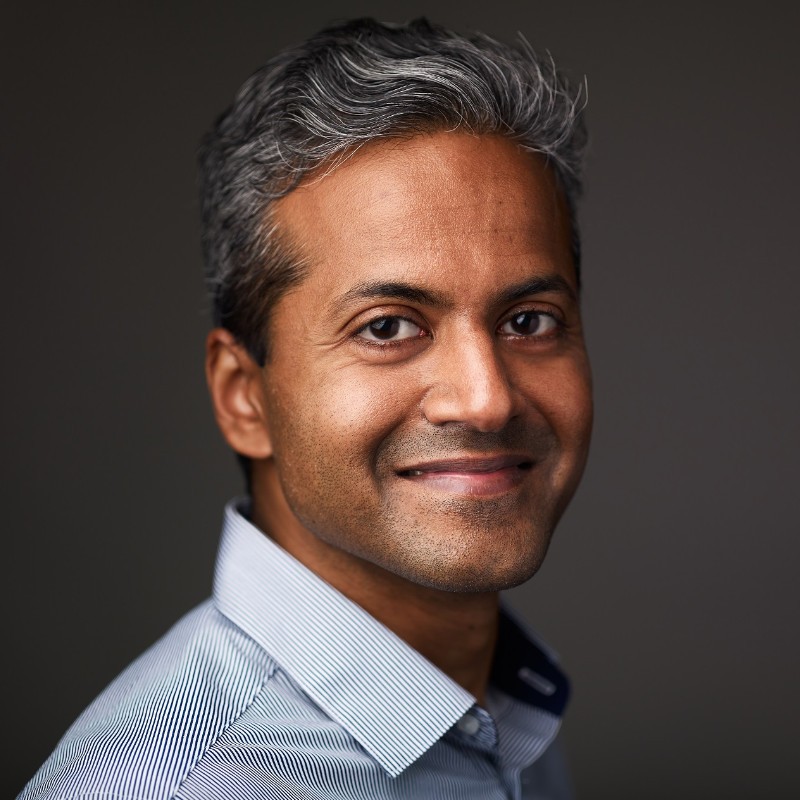
Praveen Ghanta, CEO, Hire Fraction·May 10, 2023·4 min read
The specific productivity and communication failures that made FundEasy’s offshore engagement more expensive than projected, despite lower hourly rates
How a fractional technical lead with 20+ years of Fortune 500 experience delivered an architectural assessment and remediation roadmap within two weeks of starting
Why Fraction’s model — which bundles project management and software architecture into every engagement — gave FundEasy leadership visibility they hadn’t had with their offshore team
How FundEasy expanded from one fractional hire to a three-person embedded team as the scope of the engagement grew
The exact timeline compression FundEasy achieved: from a five-year application transition roadmap to completion in under a year
FundEasy is an events management platform built to help nonprofits streamline donations and events. Like many growing software companies, it started with a small internal team and then expanded to an offshore development team to manage costs. For several years, that approach seemed to work. Then it stopped working — and the costs of making it work had quietly exceeded the savings.
Why did offshore development fail to deliver for FundEasy?
The initial appeal of offshore development was straightforward: a lower price per developer-hour. “We were originally attracted to the idea of offshore software development as a way to save money, as the price per developer seemed substantially lower,” said Liz Chechile, General Manager of FundEasy.
The problems that emerged were not unique to FundEasy. They are the structural challenges that offshore engagements consistently produce when teams cross significant time zones and communication gaps.
Definition
Offshore development: a staffing model in which a company hires a software team located in a different country — typically one with lower labor costs — to build or maintain software. The appeal is cost per hour; the risk is the gap between apparent cost and total cost, which includes coordination overhead, rework from misunderstood requirements, and extended timelines driven by time-zone friction. The FundEasy case illustrates how these hidden costs can erode — or reverse — the projected savings.
Over time, FundEasy noticed the offshore team was not as productive as they had hoped. The development process was slow, and requirements and deliverable expectations were lost in translation. A 7-hour time difference made it difficult to coordinate around issues as they arose: a blocker flagged at noon might not be addressed until the following workday. Delays compounded. Timelines extended. And internal changes at FundEasy raised new questions about technical leadership and additional resources the offshore arrangement couldn’t provide.
How did Fraction’s fractional model solve the problem?
FundEasy engaged Fraction — a platform connecting growing companies with senior, US-based developers working in embedded, part-time engagements — to put development back on track.
The core premise of the fractional model is that senior US-based engineers, working part-time, can produce more usable output than full-time offshore developers — because they operate at a higher level of technical judgment, eliminate the time-zone and communication overhead, and engage directly with the business rather than through layers of project managers and specification documents. “We work exclusively with US-based senior developers because they operate at a higher level of productivity, enabling them to effectively manage their full-time roles while also making impactful contributions to our client part-time engagements,” said Praveen Ghanta, CEO and Co-founder of Fraction.
For companies considering a similar shift, the insurance API integration case study at Rikor demonstrates how the same model applies to fast-moving integration projects where offshore coordination costs are especially punishing.
What did FundEasy’s onboarding process with Fraction look like?
Fraction started by addressing FundEasy’s most pressing gap: technical leadership. They onboarded a fractional technical lead with more than 20 years of experience across several Fortune 500 companies.
Within the first two weeks, the technical lead conducted an architectural overview of FundEasy’s existing codebase, identified specific areas requiring attention, and produced a set of concrete recommendations for completing the transition from FundEasy’s legacy application to its updated version. That pace — producing a grounded assessment with actionable next steps in under two weeks — was the first signal that the engagement was different in kind from what FundEasy had experienced offshore.
“Our fractional technical lead took charge right away and identified key areas we needed to address to accelerate our transition. We saw immediate value within the first month of the engagement,” said Sandy Barton, Product Owner. “We realized we needed to expand our development team needs to execute on these recommendations.”
With the architectural plan established, Fraction expanded the team to include two fractional Senior Full-Stack Developers. The team got to work immediately: updating the existing database structure, managing front-end impacts from the migration, and taking over maintenance of the legacy application while the new one was built out. Fraction’s model includes project management, product management, and software architecture guidance as part of every engagement — which gave FundEasy leadership a level of transparency and oversight they hadn’t had before.
“Working with an experienced, US-based development team who understood our needs made a huge difference, but additional oversight and feedback from Fraction’s MIT-educated Software Architect gave us even more reassurance that the technical approach aligned with our business objectives,” said Chechile.
Need to scope a legacy modernization project?
Fraction delivers a full scope with story-point pricing, sprint estimates, and a downloadable plan — so you know what you’re committing to before work begins.
How much faster did FundEasy’s transition move with onshore fractional talent?
The results were quantifiable in the most direct way possible: elapsed time. Before Fraction, FundEasy was operating against a five-year roadmap to complete its transition to the updated application. With Fraction’s team embedded and executing, that timeline compressed to under a year — with the heavy lifting expected to be complete by Q2 2023.
“Before Fraction, we were on a 5-year roadmap to complete our transition to the new application,” said Barton. “But with Fraction, we were able to accelerate this to less than a year and expect the heavy lifting to be done in Q2 2023!”
The delivered work included a smooth transition to the updated application, an improved platform experience with streamlined functionality, enhanced security, and continued maintenance of the legacy application during the migration period. The team also achieved measurable cost savings — not through lower hourly rates, but through the improved productivity and efficiency of the development process itself.
“The Fraction model not only helped us build a US-based fractional development team, but the built-in project management and software architecture gave us additional reassurance and transparency,” said Chechile.
This kind of outcome — a major platform modernization completed in months rather than years — is consistent with what Fraction has delivered in other technical engagements. The investment analytics platform modernization case study documents a similar pattern: a legacy-to-modern stack migration where Fraction’s embedded team resolved years of accumulated technical debt in a compressed engagement.
What are the real costs of offshore vs. onshore fractional development?
The comparison between offshore and onshore fractional development is rarely as simple as the hourly rate suggests. The offshore rate advantage is real — but it is consistently eroded by factors that don’t appear in the initial contract.
Dimension
Offshore development
Onshore fractional (Fraction)
Apparent cost
Lower hourly rate
Higher hourly rate, lower total cost
Time-zone overhead
High — 7+ hour gaps delay resolution
None — same business hours
Communication clarity
Requirements often lost in translation
Direct, real-time, in English
Senior experience level
Varies widely; oversight required
20+ year engineers; self-directing
Project management included
Typically not
Yes — bundled into every engagement
Timeline predictability
Low; delays compound
High; story-point scoping upfront
FundEasy’s experience illustrates why total cost — not rate — is the right metric for evaluating a development team. The offshore arrangement appeared cheaper; the full-cost accounting, which included timeline extensions, rework, and the management overhead required to bridge the communication gap, told a different story.
For companies evaluating whether a similar transition makes sense for their product or engineering team, Fraction’s work at ViVE 2023 provides additional context on how the company engages with the healthcare technology sector, where compliance and technical complexity raise the cost of offshore coordination even further.
Frequently asked questions
Why do offshore development teams often underdeliver despite lower hourly rates?
Offshore teams appear cheaper per developer-hour, but the all-in cost includes coordination overhead, rework from miscommunication, longer feedback loops, and extended timelines. A 7-hour time difference means issues raised in the morning may not be addressed until the following day. Requirements lost in translation produce code that has to be rebuilt. FundEasy found that these hidden costs eroded the expected savings and resulted in a slower, more expensive outcome than projected.
What is a fractional developer and how does the model work?
A fractional developer is a senior, US-based engineer who works part-time but on a long-term basis, embedded inside a single client company. Unlike a contractor on a short-term project, a fractional developer attends standups, contributes to architectural decisions, and builds institutional knowledge over months. Fraction’s model includes project management and software architecture oversight as part of every engagement, giving clients senior-level output without the cost or commitment of a full-time hire.
How quickly can a fractional development team become productive?
FundEasy’s fractional technical lead delivered an architectural overview and a concrete set of recommendations within the first two weeks of engagement. The broader team — which grew to include two senior full-stack developers — was executing against those recommendations within the first month. Fraction attributes this speed to working exclusively with senior engineers who can assess codebases and business requirements rapidly, without the ramp time typical of junior or mid-level hires.
How does Fraction's model compare in cost to a full-time onshore engineering hire?
A full-time senior engineer in the US carries a fully-loaded cost of $200,000–$300,000+ annually, plus benefits, equity, and recruiting fees. A fractional engagement gives companies access to the same caliber of engineer at a fraction of that cost, since the developer works part-time across one client. Fraction also bundles project management and software architecture into the engagement rate, which eliminates the need to hire or manage those functions separately.
Is the fractional model suitable for companies that need dedicated, ongoing engineering work?
Yes — fractional engagements are designed for continuity, not one-off projects. Fraction’s developers work on a long-term, embedded basis with a single client, which means they build deep familiarity with the codebase, team, and product direction over time. FundEasy’s engagement expanded from one fractional technical lead to a full team of three over several months, demonstrating how the model scales as a company’s needs grow.
Praveen Ghanta
CEO, Hire Fraction
Praveen Ghanta is a five-time founder and serial entrepreneur. He is the founder of DevHawk.ai, an AI-powered engineering management platform, and Fraction.work, which connects fast-growing companies with top fractional tech and growth marketing talent. Previously, he founded HiddenLevers, a risk analytics platform for wealth management that he bootstrapped from inception to acquisition by Orion Advisor Solutions in 2021, serving thousands of advisors and $600B in assets. He earlier founded SmartWorkGroups, acquired by Intralinks in 2000.
Describe your software or AI project. Get a full scope with story-point pricing, sprint estimates, and a downloadable plan in minutes. No calls, no waiting.